Onboarding Time Capsule

by Joshua Fernandez
A cinematic, scenario-based onboarding experience where a new hire's smallest workplace decisions send ripples across the team.
Flagship
Joshua Fernandez came to Peck Academy with a long background in teaching, a storyteller's instinct, and a conviction that onboarding should feel like the work itself, not a course that describes it.
His flagship project, Onboarding Time Capsule: How Ripples Shape the Future of Work, drops a new employee into a collaborative, client-facing project team and gives them a safe place to practice the decisions that are rarely as clear in real life as they appear in a policy or handbook.
Onboarding as an Investigation, Not a Course
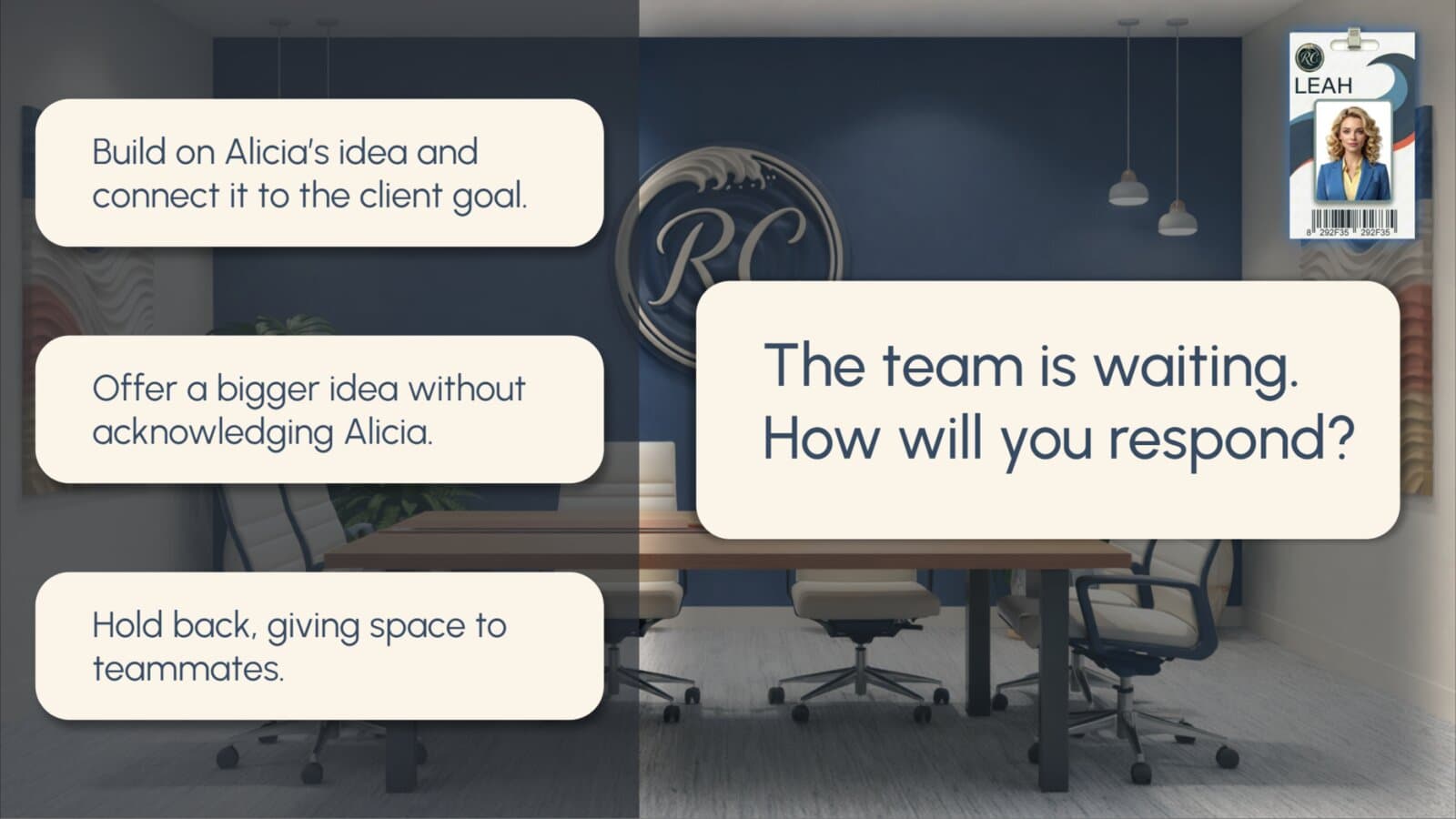
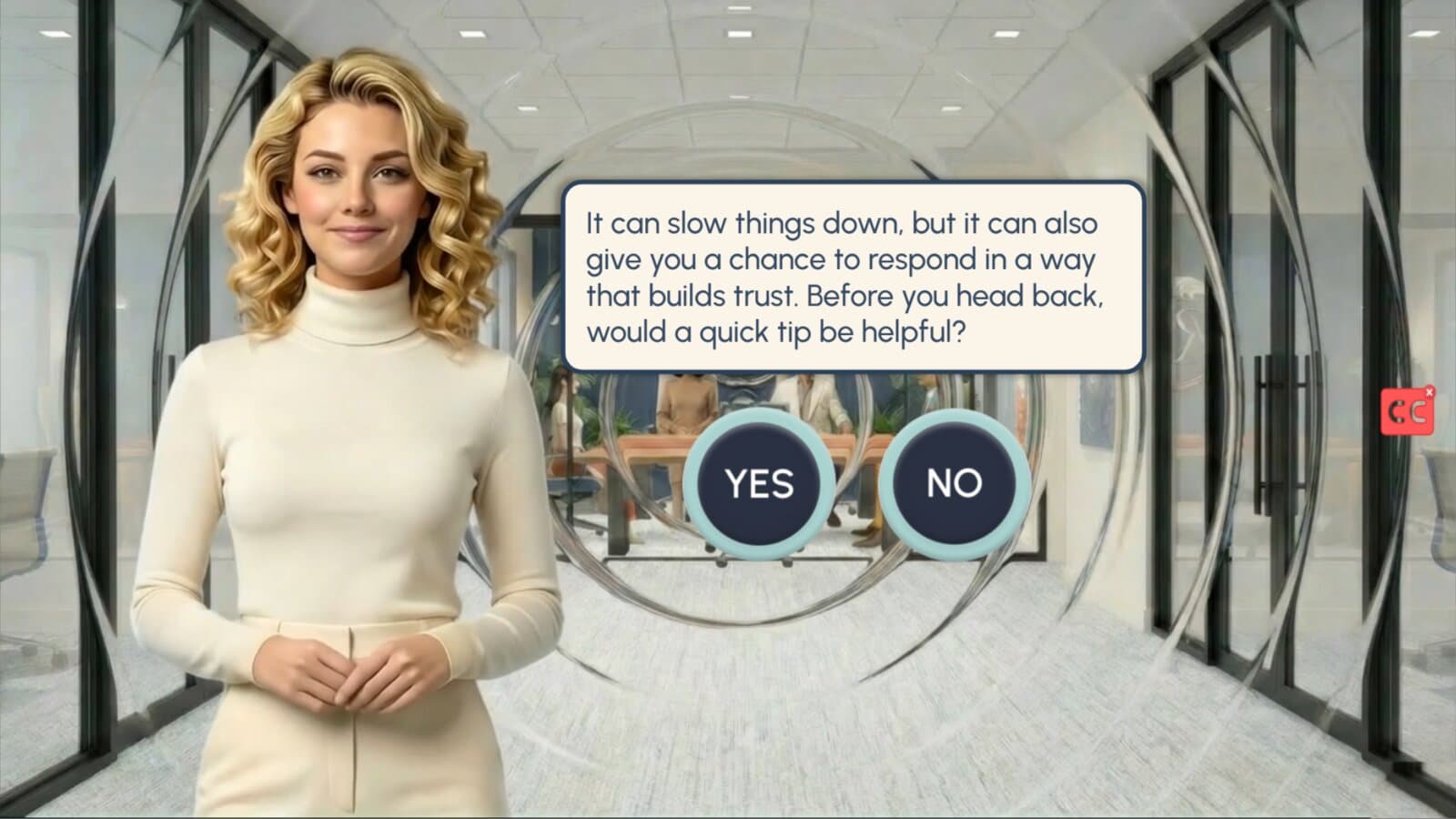
The experience opens on a set of archived workplace recordings: gaps in a team's past decisions may have affected deadlines, but a hopeful future is still within reach. After setting up an Echo ID, the learner joins the fictional company Ripple Crest as a new employee, meets the team, and is introduced to Leah, a mentor who offers just-in-time guidance while leaving every decision in the learner's hands.
Across three workplace scenarios, the learner navigates a kickoff discussion, a conflict between speed and detail, and a deliverable that is falling behind. Each choice produces visible reactions from teammates, responses from the client, and movement on a dynamic phase tracker.
Joshua built the project around a performance problem he knew well: new hires may understand collaboration expectations in theory, but it is harder to decide what to say or do when teammates disagree, priorities compete, and a deadline is at risk.
The time capsule concept let him show that small workplace decisions create consequential ripples through team trust, client confidence, and the quality of the work that follows, all the way to a cumulative 90-day review that connects the learner's choices to their readiness for greater responsibility.
“Mentor feedback, the Academy's structured process, and repeated testing helped me become more willing to cut, rewrite, and rebuild when necessary. That was an important shift for me.”
— Joshua Fernandez
Feedback That Made Every Feature Earn Its Place
Peck Academy gave Joshua a clear process for moving from a broad idea to a performance-based learning experience: define the problem, map the actions learners need to practice, storyboard, prototype, test, and develop the full project with accessibility and user experience in mind.
Just as important was the mentorship. Rather than simply saying whether something looked good, mentor feedback pushed him to explain why each scene, interaction, and visual belonged and how it served the learning.
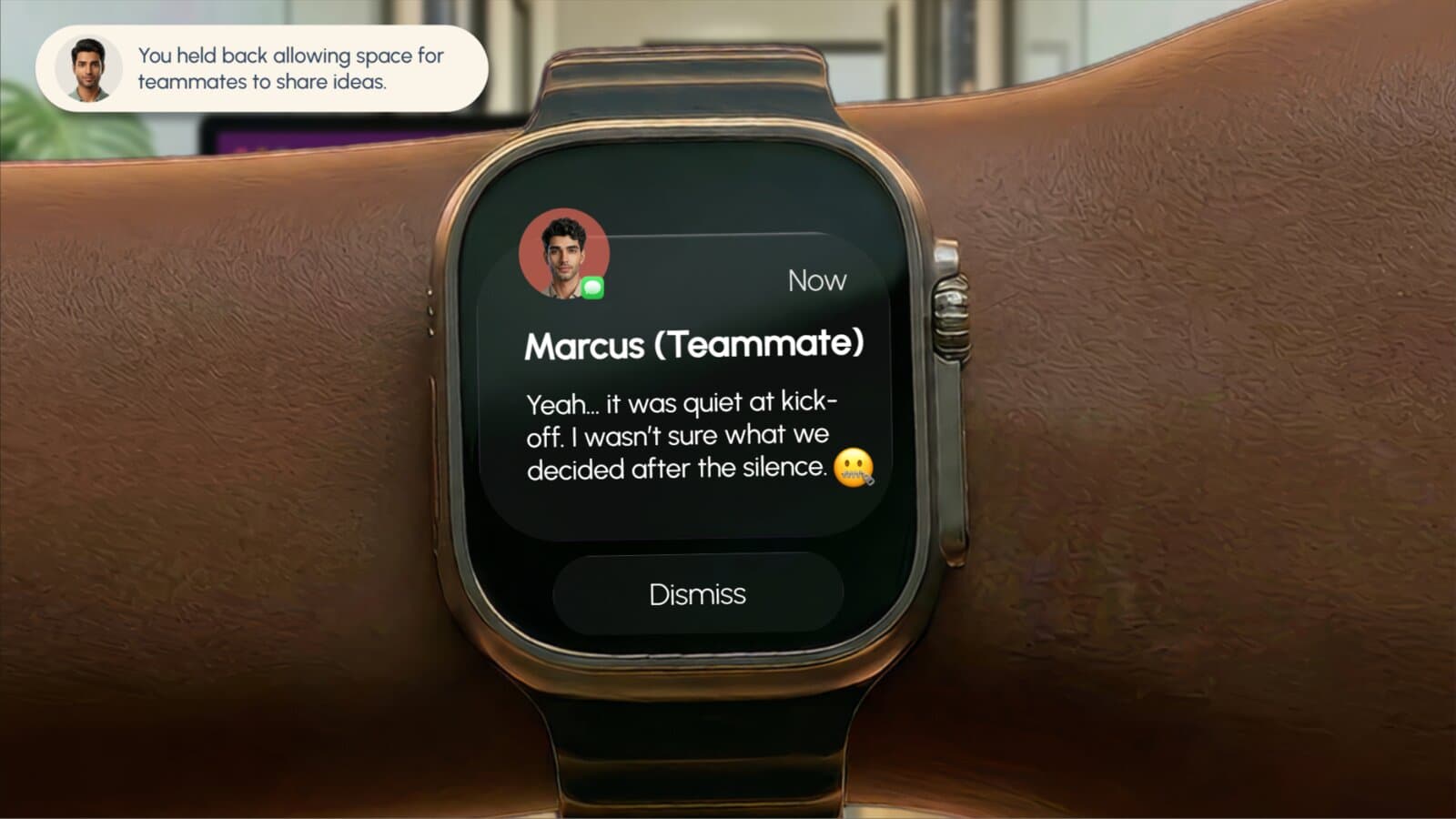
One piece of feedback reshaped the project's signature ripple sequence. The original version paired the smartwatch consequence messages with a full Slack-style team exchange: visually engaging, but it extended the experience and competed with the clearest feedback.
Joshua cut the Slack portion, rewrote the smartwatch messages to connect each one directly to the learner's selected choice, and added a small visual reminder of the learner's avatar and decision throughout the sequence. The cause-and-effect relationship got easier to follow, and the learner stayed focused on the behaviors they were practicing.
Bringing Cinematic, AI-Powered Scenario Design to Corporate L&D
Building the project strengthened Joshua's ability to design from a performance problem rather than a content or visual concept. He became confident using Storyline states, variables, conditional triggers, and JavaScript to create an experience that remembers and responds to learner decisions.
He also learned to orchestrate multiple AI and creative tools while keeping characters, environments, tone, and visual style consistent, with captions, on-screen text, and learner controls supporting accessibility throughout.
Joshua is now pursuing remote instructional designer, eLearning developer, and learning experience designer roles in corporate learning and development. He is especially drawn to scenario-based learning, more engaging onboarding and compliance training, and teams exploring AI thoughtfully, where he can help turn connected AI, creative, and development workflows into practical, responsible production systems.
“Creating Onboarding Time Capsule was the point where many separate skills began to feel like one instructional design process. I came into Peck Academy with a long background in teaching, a strong instinct for storytelling, and a desire to build experiences that feel meaningful and relevant. The Academy helped me translate those strengths into performance-focused design. I learned to begin with what people need to do, then make every design decision answer to that goal.”
“The project also challenged me to balance ambition with clarity. I wanted it to feel cinematic, immersive, and emotionally engaging, but those qualities could not come at the expense of pacing or learner purpose. Mentor feedback, the Academy's structured process, and repeated testing helped me become more willing to cut, rewrite, and rebuild when necessary. That was an important shift for me. I stopped treating revision as fixing work that had failed and began seeing it as the work of designing for learning.”
“I am proud of the finished product because it shows how I think through a problem, work through effective solutions, respond to feedback, manage a complex production process, and keep the learner at the center of it all. Being invited to share it in the Peck Academy Showcase means a great deal to me because the project reflects where I started and the kind of instructional designer I am becoming.”